
STARLINK ISN’T REALLY ABOUT THE INTERNET
The decline of rural connectivity on the ground—and the extraordinary future being built above us
Alborán Connect • Articles


The recent eclipse revealed something fascinating about human behaviour.
People queued for hours to buy eclipse glasses. Roads were packed. Social media exploded. News channels counted down the minutes.
The masses looked upwards because the media told them something important was happening.
Yet how many actually understood the celestial mechanics behind it?
How many understood the precise alignment of the Sun, Moon and Earth? The distances involved? Or what they should genuinely expect to witness that evening?
Probably very few.
That isn’t necessarily a criticism. Wonder can exist without expertise.
But there is an uncomfortable contradiction here.
Many of the same people who became fascinated by the sky for one evening will casually ridicule Elon Musk, SpaceX and Starlink—often with even less understanding of what is actually happening above them.
“Satellites ruining the sky.”
“Space junk.”
“Billionaires playing with rockets.”
A headline is read. A meme is shared. An opinion is formed.
No research required.
So, let’s address it.
This is not about worshipping Elon Musk
You don’t have to like Musk.
You don’t have to agree with his politics, personality, opinions, methods or every decision he makes.
But personal dislike is not an intelligent argument against engineering reality.
SpaceX is not simply one billionaire launching rockets for amusement.
It is an attempt to construct an entirely new transport and communications infrastructure—from the surface of Earth, through orbit, to the Moon and ultimately Mars.
Most people know that Starlink provides satellite internet.
Far fewer understand that Starlink is part of that much greater SpaceX vision.
Every Starlink connection helps build a global communications network. It also supports a company developing reusable rockets, human-rated spacecraft, lunar transport, orbital infrastructure and the technology required for humanity to travel beyond Earth.
Meanwhile, rural connectivity on the ground is getting worse


Across rural Andalucía, we repeatedly encounter people who have simply had enough.
Customers using Avatel, Axarfusión and various WiMAX-based services tell us about recurring outages, deteriorating speeds, unstable connections and support processes that fail to produce lasting solutions.
Some have spent years paying for services that never consistently deliver what modern homes and businesses now require.
We visit properties where the connection works one day and collapses the next.
Where speeds disappear during busy periods.
Where a distant terrestrial mast becomes overloaded.
Where mountains, valleys, vegetation and thick walls make an already compromised signal even worse.
Where adverse weather, power problems or equipment failures take entire areas offline.
Where customers repeatedly report the same fault—but nothing fundamentally changes.
This is not to claim that every customer of every terrestrial provider receives a poor service.
Some connections work perfectly well.
But the pattern we encounter throughout the campo is undeniable: too many rural customers are being asked to depend upon ageing, congested or insufficient infrastructure while their need for connectivity continues to grow.
Homes now depend on internet access for work, education, entertainment, security cameras, communication and increasingly the operation of essential technology.
Holiday-rental businesses depend on it.
Restaurants depend on it.
Farms depend on it.
Remote workers depend on it.
Elderly and vulnerable people depend on it.
Yet in many areas, the underlying terrestrial infrastructure has not evolved at anything close to the same pace.
Demand rises.
More customers are added.
Available capacity is divided further.
Speeds decline.
Reliability suffers.
And the customer is still expected to accept it because they live in the campo.
That is the worsening reality on the ground.
Above us, something very different is happening.
Today brought that contrast into sharp focus
As this article was being written, Avatel customers across our area had been without internet for approximately 12 hours.
Homes were disconnected.
People couldn’t work.
Businesses couldn’t operate normally.
Entertainment disappeared—but so did access to security systems, communications and other services upon which modern homes increasingly depend.
The precise geographical scale and cause of today’s incident have not yet been officially established, so we will not invent figures or exaggerate what we cannot verify.
Avatel has a substantial customer base across Spain, widely reported at approximately 1.4 million customers across its services. That does not mean every one of those customers was necessarily affected by today’s outage.
But for the people who were affected, the disruption was real—and painfully familiar.
Today’s failure is not the entire argument against continued dependence on overstretched or increasingly consolidated terrestrial infrastructure.
It is simply the latest illustration of it.
People can forgive an occasional technical failure. Every communications network—including Starlink—can experience an outage.
The deeper problem begins when failure becomes familiar.
When customers expect the service to disappear.
When they receive no meaningful information.
When they repeatedly reboot equipment that was never the cause of the problem.
When hours pass without any clear indication of what has happened or when normal service will return.
That is no longer an isolated inconvenience.
It becomes an issue of resilience, accountability and whether the infrastructure is genuinely capable of supporting the communities that depend upon it.
Starlink changes the geography of communication
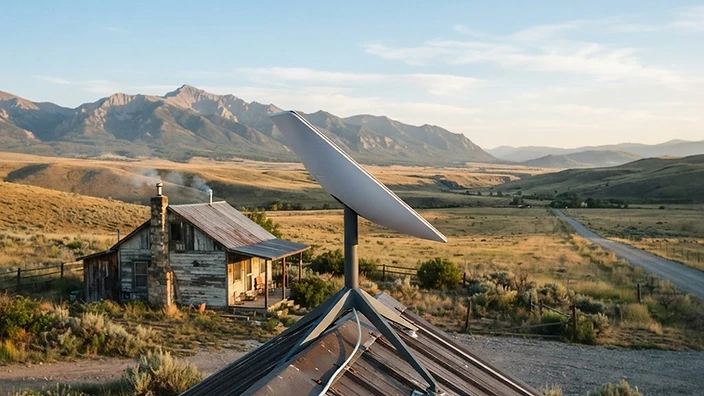

Traditional infrastructure follows roads, cities, population density and—above all—profitability.
Remote communities are often ignored because installing fibre is expensive and terrestrial wireless networks are difficult to expand and maintain.
Starlink changes that equation.
A rural home, a farm kilometres from the nearest town, a ship at sea, an aircraft in flight or a community beyond conventional infrastructure can connect through a network in low-Earth orbit.
Instead of depending entirely upon one distant terrestrial mast, the user connects to satellites moving overhead as part of an evolving global network.
At Alborán Connect, we see the human effect of that technology every week.
We meet families who have spent years fighting unreliable connections.
People unable to work properly from home.
Businesses restricted by their location.
Children struggling to study.
Security systems unable to remain online.
Elderly, vulnerable and isolated people without dependable communication.
Then a relatively small dish is installed, looks towards the sky and completely changes what is possible.
For some people, Starlink is simply faster internet.
For others, it is the first serious communications infrastructure that has ever reached them.
And while many conventional rural networks appear to be struggling under increasing demand, Starlink continues launching satellites, adding capacity, developing new hardware and expanding the capabilities of its network.
One model is fighting to maintain yesterday’s infrastructure.
The other is actively building tomorrow’s.
Falcon 9 made Starlink possible
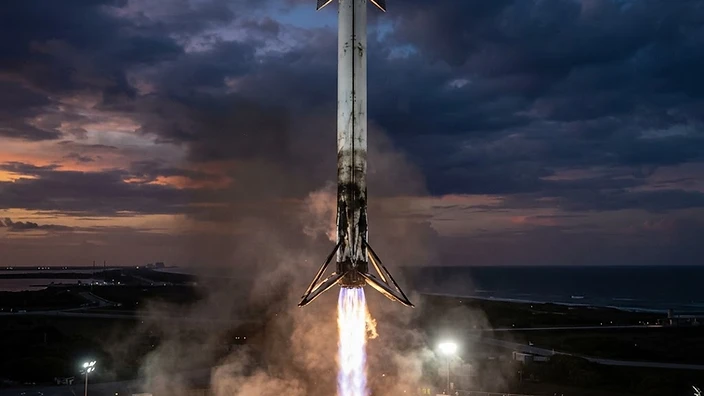

For decades, rockets were enormously expensive machines generally used once and discarded.
SpaceX demonstrated that an orbital-class booster could launch, return through the atmosphere, land vertically and fly again.
Reusability isn’t merely spectacular to watch.
It reduces launch costs, increases launch frequency and makes it possible to construct and continually replenish a satellite network on the scale Starlink requires.
Falcon 9 also makes space more accessible to governments, scientists, universities, communications companies and smaller organisations that could never previously have afforded their own route into orbit.
Falcon Heavy expands that capability by carrying much larger payloads into demanding orbits and interplanetary trajectories.
Dragon carries human beings—not promises
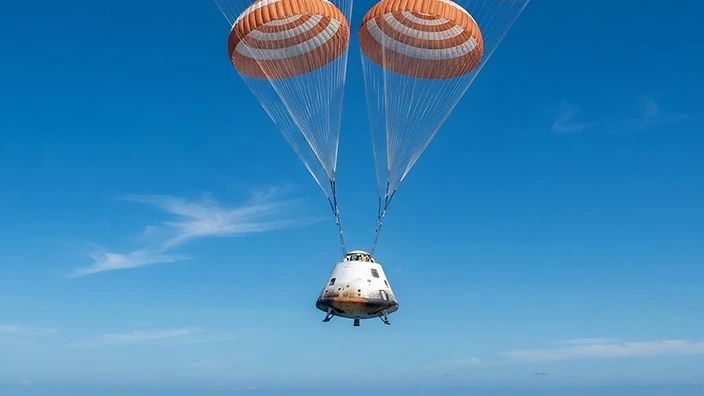

Crew Dragon transports astronauts to and from the International Space Station.
Cargo Dragon carries equipment, supplies and scientific experiments—and returns valuable research safely to Earth.
SpaceX is not merely suggesting that commercial human spaceflight may become possible one day.
It is already doing it.
Its spacecraft are actively supporting astronauts and scientific work in orbit.
Opening space to other people’s ideas
SpaceX’s Rideshare programme allows multiple organisations to place payloads aboard the same launch.
Smaller companies, universities, researchers and developing space programmes can share the journey instead of funding an entire rocket.
Weather monitoring, environmental research, communications, navigation, Earth observation and experimental technologies can all benefit.
SpaceX isn’t only launching its own ideas.
It is building the transport system that allows thousands of other ideas to leave the ground.
Starlink extends far beyond the home
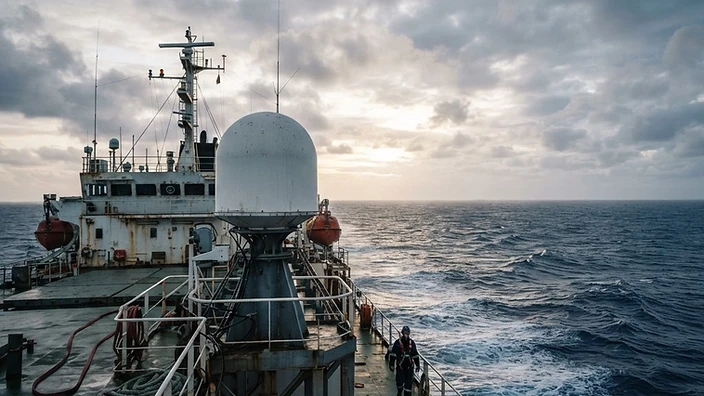

Starlink Mobility provides connectivity for vehicles, ships and aircraft.
Community Gateway can deliver high-capacity satellite connectivity to entire remote communities through local providers.
Direct to Cell is being developed to allow ordinary mobile phones to communicate through satellites where no terrestrial mast exists.
Think about what that could mean.
A person injured in the mountains.
A vehicle stranded in an isolated area.
A fishing boat beyond normal coverage.
A wildfire, earthquake or flood that destroys terrestrial communications.
A rural community suddenly cut off from the outside world.
Removing mobile dead zones is not merely about convenience.
In the right circumstances, it could mean the difference between isolation and rescue—or even between life and death.
Space-based security and resilience
Starshield adapts SpaceX technology for secure government communications, Earth observation and hosted satellite payloads.
That deserves proper scrutiny.
Any combination of private power, global communications and national security should be examined carefully.
There are legitimate questions surrounding regulation, control, environmental impact and accountability.
But there is an enormous difference between intelligent scrutiny and uninformed dismissal.
Serious questions require serious discussion—not lazy memes.
Starship and the next stage
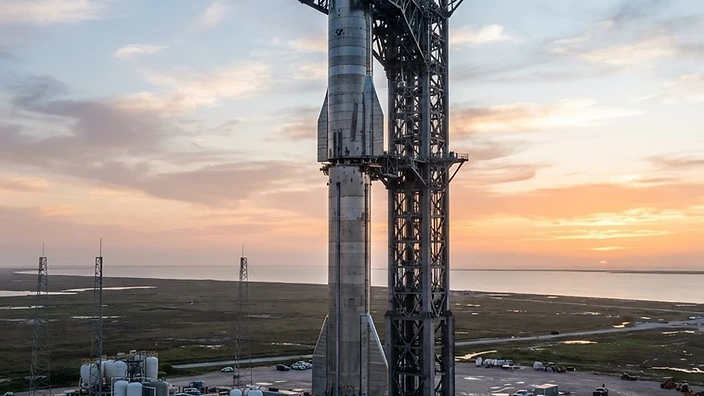

Starship and Super Heavy represent SpaceX’s attempt to develop a fully reusable transport system capable of carrying vastly greater payloads—and eventually people—beyond Earth orbit.
The programme includes Raptor engines, orbital refuelling, new launch infrastructure and enormous launch towers intended to recover vehicles for rapid reuse.
Tests fail.
Hardware is destroyed.
Timelines slip.
That is not proof that nothing is being achieved. It is what developing technology on an unprecedented scale looks like.
Every test produces data.
Every failure exposes a weakness.
Every redesign advances the engineering.
Starship is intended to deploy larger orbital infrastructure, transport cargo, support commercial human spaceflight and play a central role in returning people to the Moon.
NASA selected a Starship-derived Human Landing System for its Artemis lunar programme.
SpaceX is also proposing commercial cargo missions to the lunar surface for scientific research, development and exploration.
And then there is Mars
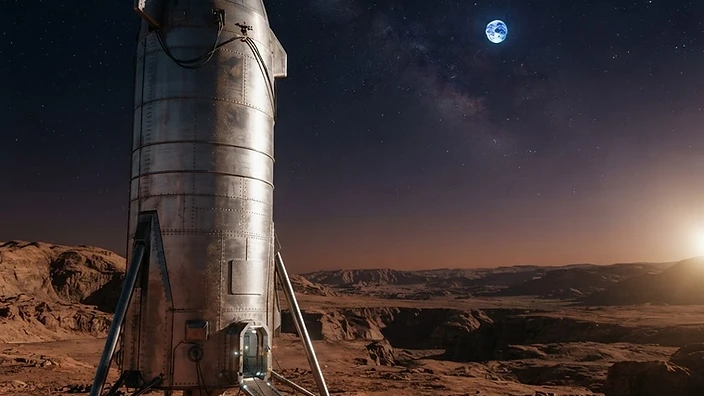

Beyond the Moon sits SpaceX’s most controversial ambition.
Mars.
Not simply a flag-and-footprints visit.
The long-term objective is to develop the transport, power, communications and life-support infrastructure required for a permanent human presence on another planet.
That does not mean abandoning Earth next Tuesday.
It means asking one of the largest questions our species can ask:
Should the entire future of humanity remain permanently confined to a single planet?
You may believe the Mars ambition is premature.
You may believe the risks are too great.
You may believe the money should be spent differently.
Those are legitimate arguments.
But “I don’t like Elon Musk” is not a scientific rebuttal.
Two very different futures
Here in rural Spain, the contrast could hardly be clearer.
On the ground, many customers remain dependent upon infrastructure that is overloaded, unreliable or incapable of keeping pace with modern life.
They wait for engineers who may never arrive.
They reboot routers.
They report the same fault repeatedly.
They tolerate diminishing speeds and extended outages because they have been told there is no realistic alternative.
Above them, reusable rockets are landing vertically.
New satellites are being launched.
Ordinary mobile phones are beginning to communicate directly with space.
Astronauts are travelling aboard commercial spacecraft.
Lunar transportation systems are being developed.
The foundations of a possible human presence on Mars are being tested.
One future tells rural communities to wait patiently and accept their limitations.
The other is attempting to remove those limitations from the sky.
That is why Starlink matters.
It is not a perfect system.
It can experience outages.
It requires electrical power and an unobstructed view of the sky.
Its orbital and environmental impact must be taken seriously.
It should not be exempt from criticism, regulation or responsibility.
But it represents genuine progress in a rural communications market that has left too many people standing still—or moving backwards.
Starlink is part of something far greater
Starlink should not be viewed as an isolated collection of internet satellites.
It is the communications layer of a much larger system.
It connects Earth today while supporting the vehicles, infrastructure and engineering SpaceX intends to build tomorrow.
SpaceX now operates across:
Reusable rockets.
Heavy-lift launches.
Human spaceflight.
Space-station transportation.
Scientific research.
More affordable satellite deployment.
Earth observation.
Global broadband.
Remote-community connectivity.
Internet for ships and aircraft.
Direct satellite-to-phone communication.
Secure space infrastructure.
Lunar cargo missions.
Human lunar landing systems.
Orbital refuelling.
And the long-term attempt to establish humanity beyond a single planet.
Nobody is asking you to worship Musk.
Criticise him when criticism is deserved.
Question the environmental consequences.
Debate orbital congestion.
Demand regulation, accountability and transparency.
But understand the scale of the project before dismissing it.
The eclipse held the world’s attention for a few minutes.
The engineering taking place above us may influence the direction of human civilisation for centuries.
So step away from the personality.
Step away from the political tribe.
Step away from the media headline.
Learn the science.
Understand the vision.
Then form your opinion.


Alborán Connect
We don’t merely install Starlink.
We help rural homes, families and businesses leave yesterday’s limitations behind—and connect to one small part of something far greater.
Alborán Connect
Independent connectivity, networking and technology solutions across southern and eastern Spain.